Netology
Product design for EdTech SaaS and mobile
Overview
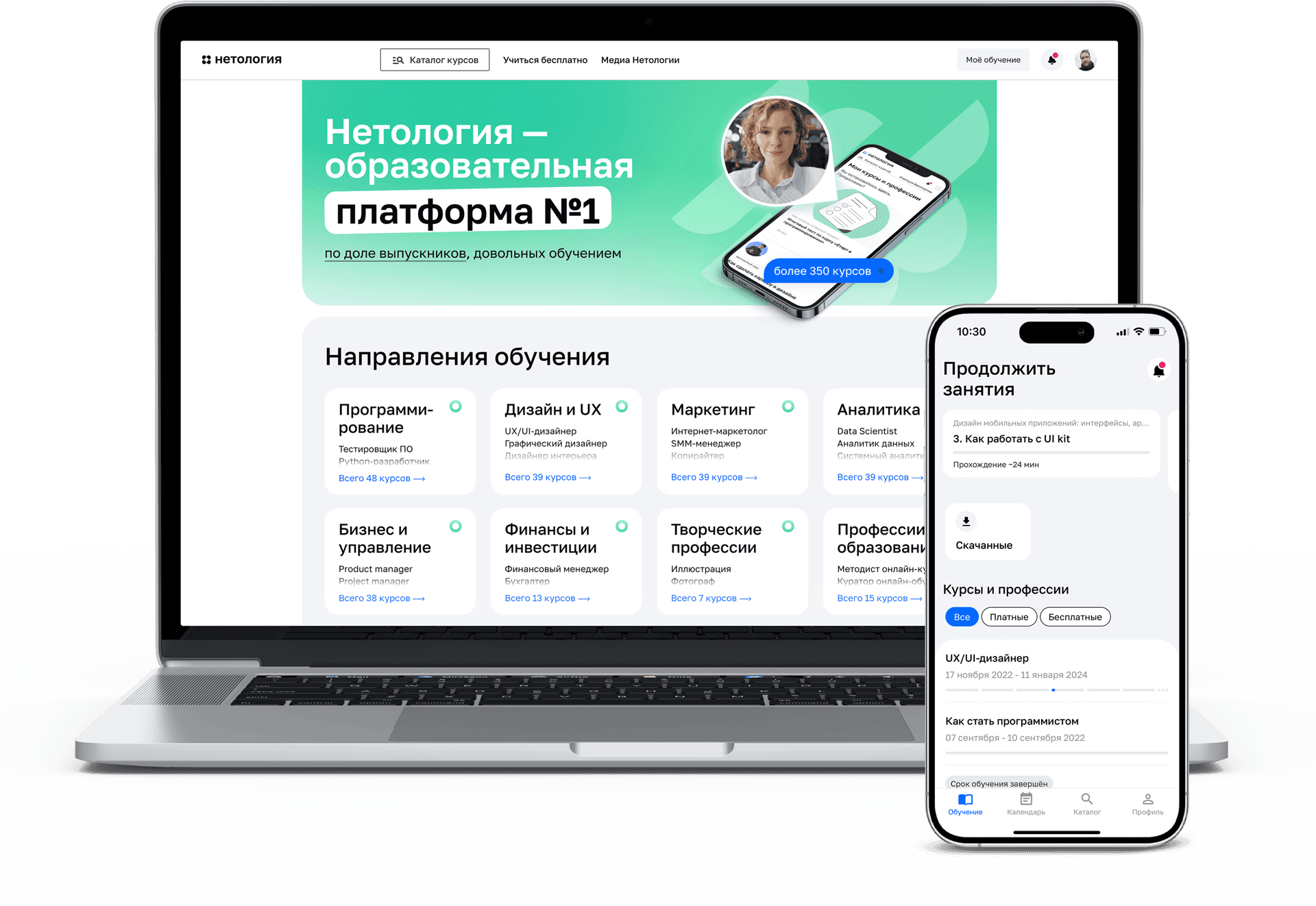
Netology is one of the largest EdTech platforms in the CIS, with 3 million monthly active users and approximately $5 million in annual revenue. It offers online technology courses lasting from four months to two years.
2020–2021 — Product Designer
- Analyzed user flows and proposed data-informed improvements to retention and churn
- Developed and ran an A/B testing strategy
- Used product analytics to measure design impact
- Iterated with product managers and engineers
- Designed new LMS features and contributed to the web design system
- Created interactive prototypes and product documentation
2021 — Senior Product Designer
- Conducted user research and testing
- Built a reusable prototyping system with product and engineering teams
- Created a presentation design system that saved roughly 200 working hours per month
- Balanced user needs, business goals, and engineering constraints
- Built a student community with two academic experts, increasing retention by 56% in test groups
- Promoted to a lead role in late 2021
2021–2023 — Lead Product Designer
- Led Motivation and Mobile App design tracks
- Mentored designers and improved team workflows
- Increased team delivery speed by up to 70%
- Collaborated with product leadership on backlog and KPIs
- Helped translate the desktop SaaS experience into native iOS and Android applications
- Contributed to the mobile design system
Case 1 — Q&A forum
Global goal
Improve the forum so students, experts, and coordinators can find and handle questions more easily.
Problems
- The questions page was unclear
- Duplicate questions made search difficult
- 65–83% of students did not ask questions; they searched for similar questions and read existing answers
Hypotheses
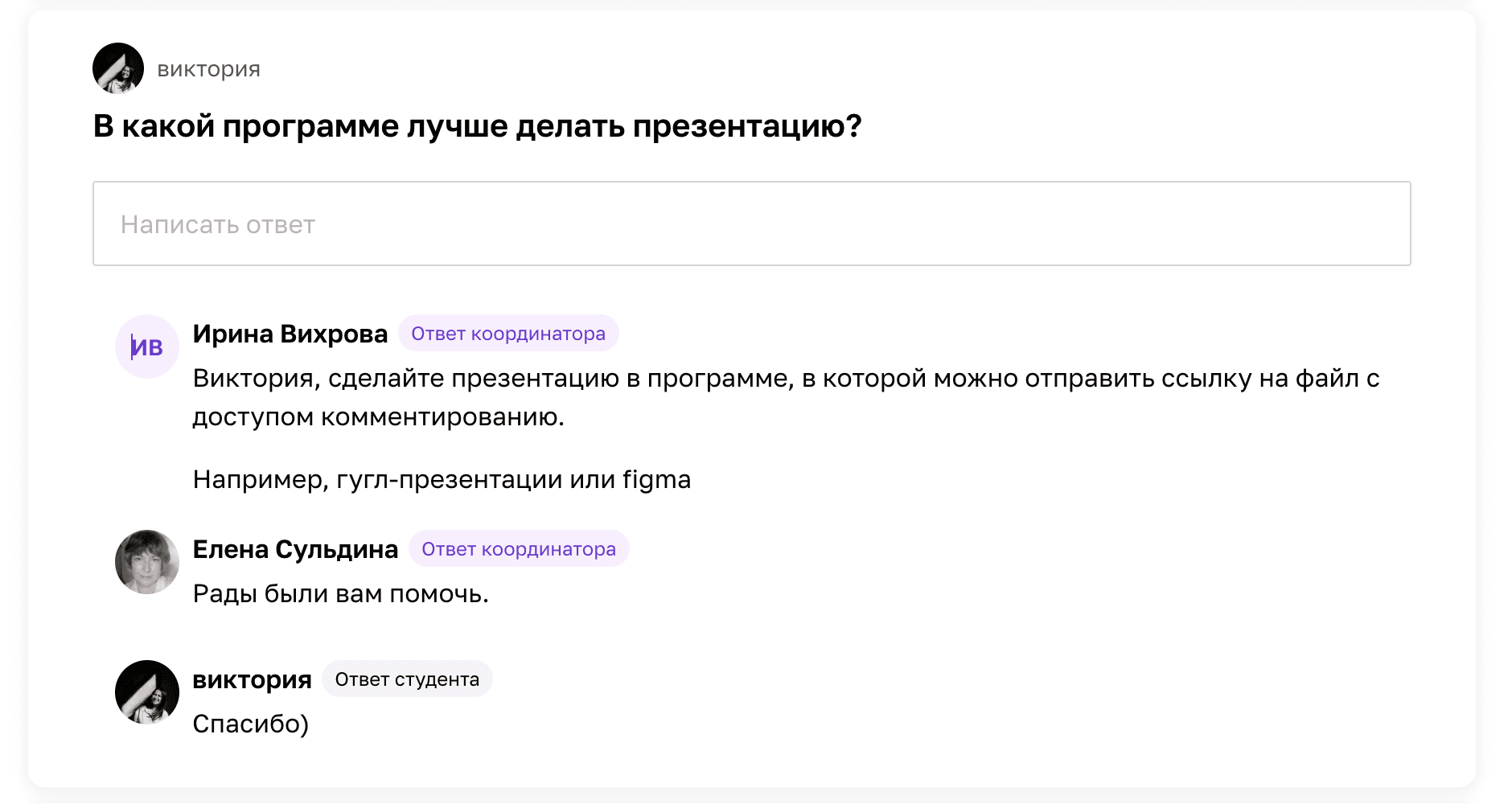
- Role tags would make the authority of each answer immediately visible
- Weighted sorting would keep the most useful answers on top
- Answer by myself would let active students help classmates and earn achievements
- Experts and coordinators should be able to hide duplicate questions
Solution
We introduced role badges, an eight-level answer ranking system, top-answer controls, and a student-answer flow. Experts could mark strong answers as correct, while coordinators could hide duplicates from everyone except the original author.
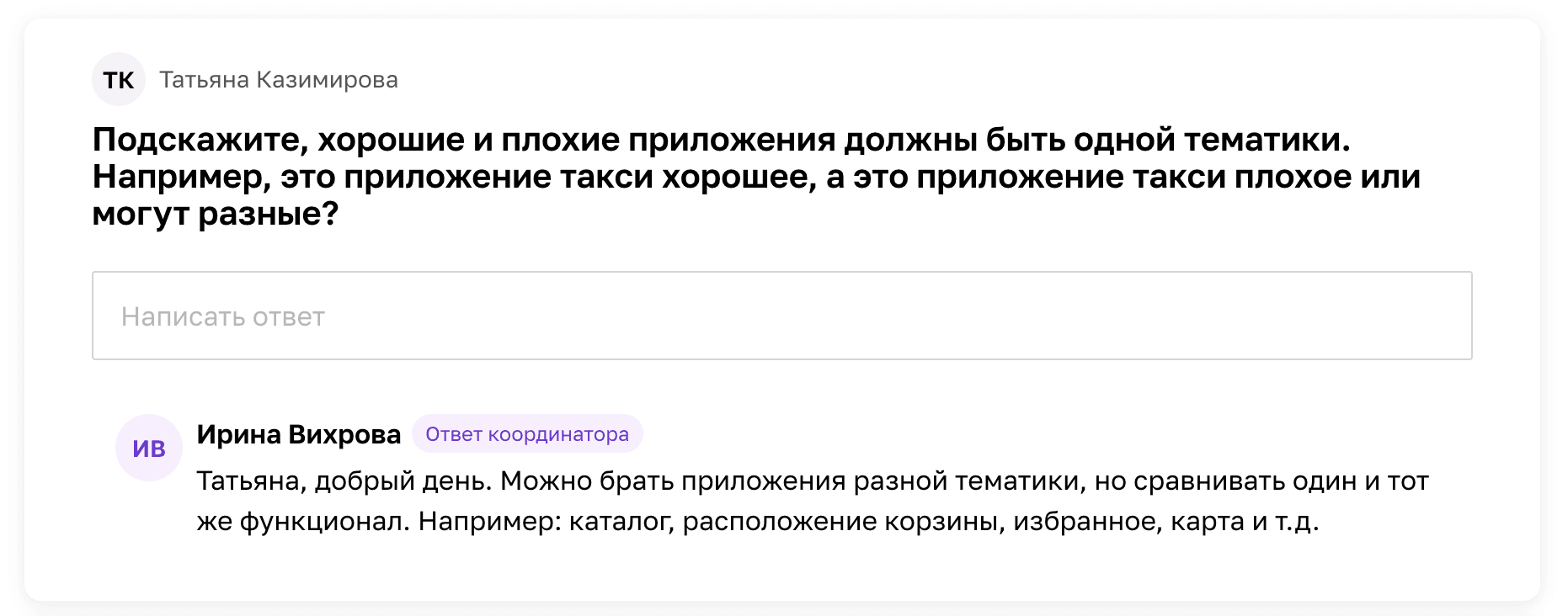
Around 30% of students were already active enough to help others; another 10–15% began participating after seeing the new answer prompts. Hiding duplicates halved the number of repeated questions in homework sections.
Case 2 — Gamification
Global goal
Increase motivation to complete assignments, finish course sections, and keep pace with the program.
Hypothesis
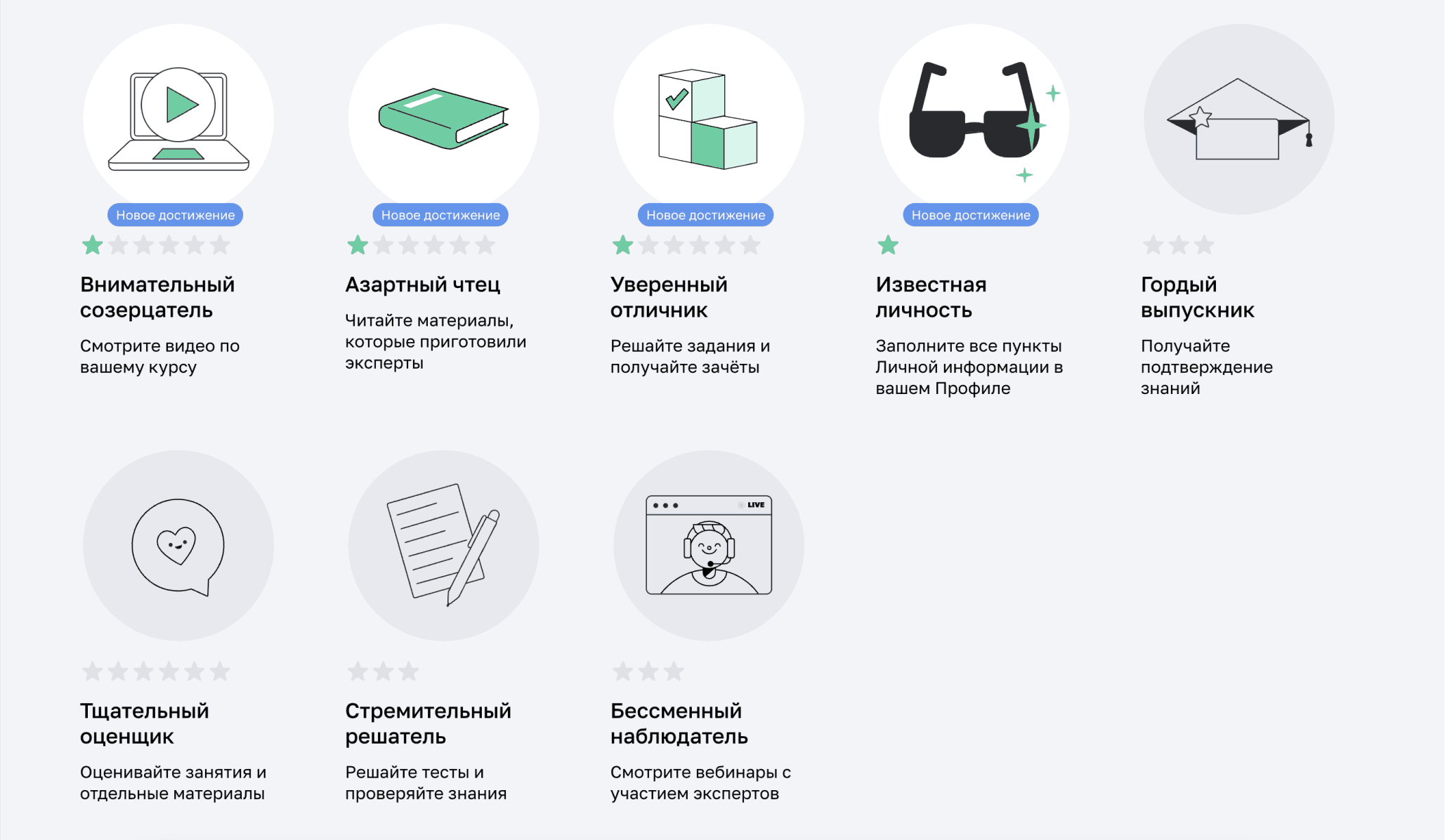
A unified achievements page combining rewards, advice, and progress reminders would motivate students to engage in more learning activities.
Features
- A dedicated achievements section
- Brand-styled badges and star levels
- Achievement notifications
- Learning prompts with light challenges
- Motivational reminders after inactivity
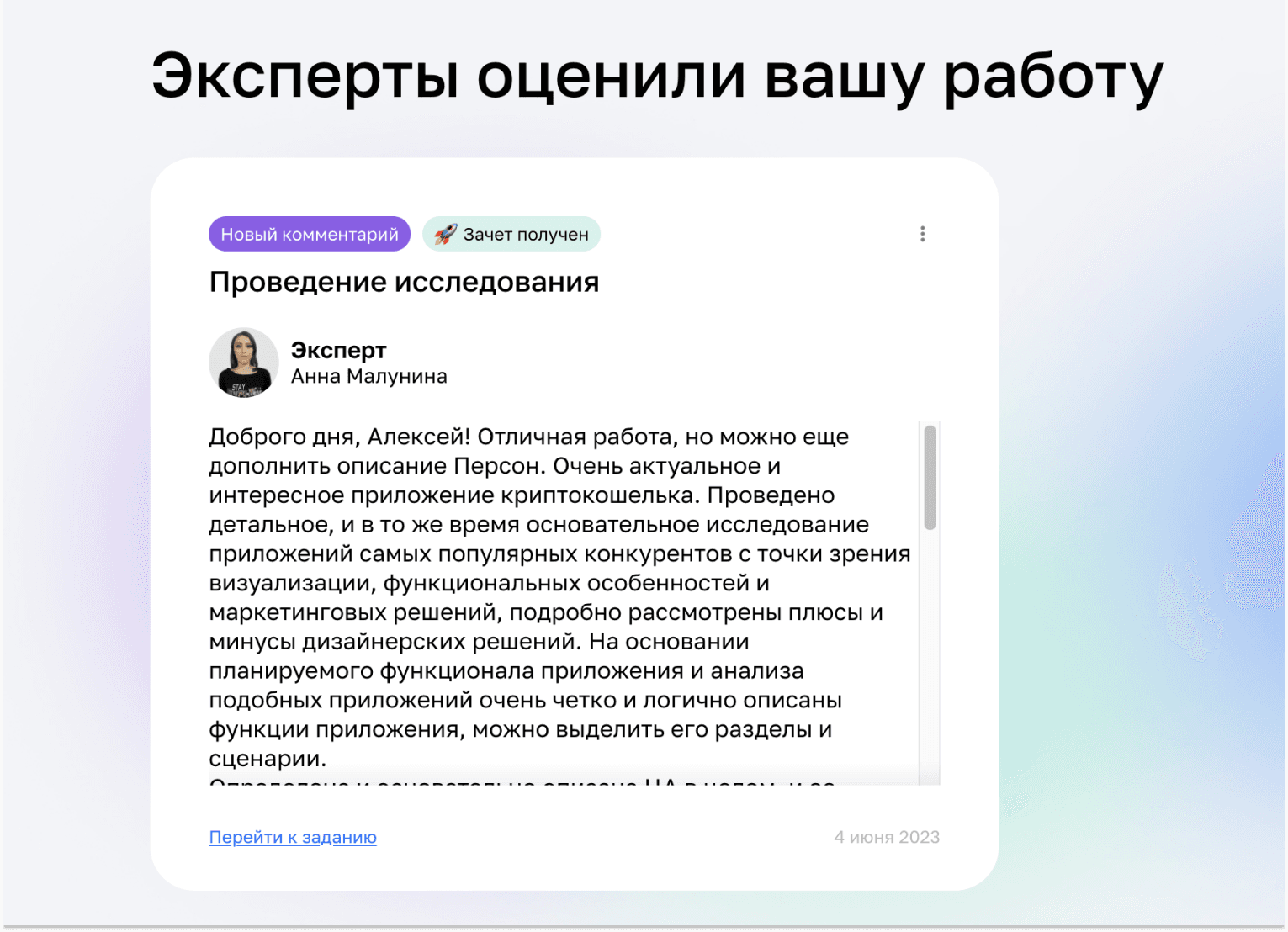
- A single place for expert and coordinator feedback
The feedback archive became even more valuable than the badges. Students returned to reread expert advice and reopen useful links.

How we measured it
We tested with three course groups totaling 177 students, beginning with moderated prototype interviews and then measuring post-launch activity.
Follow-up
The achievements page received strong feedback and was rolled out to every course within one quarter. The marketing team then built a three-month campaign around it.
Case 3 — Self-development compass
Global goal
Increase course completion and reduce churn.
Hypothesis
A tool for organizing learning time and setting goals would make progress easier to understand and help students adapt as their ambitions changed.
Flow
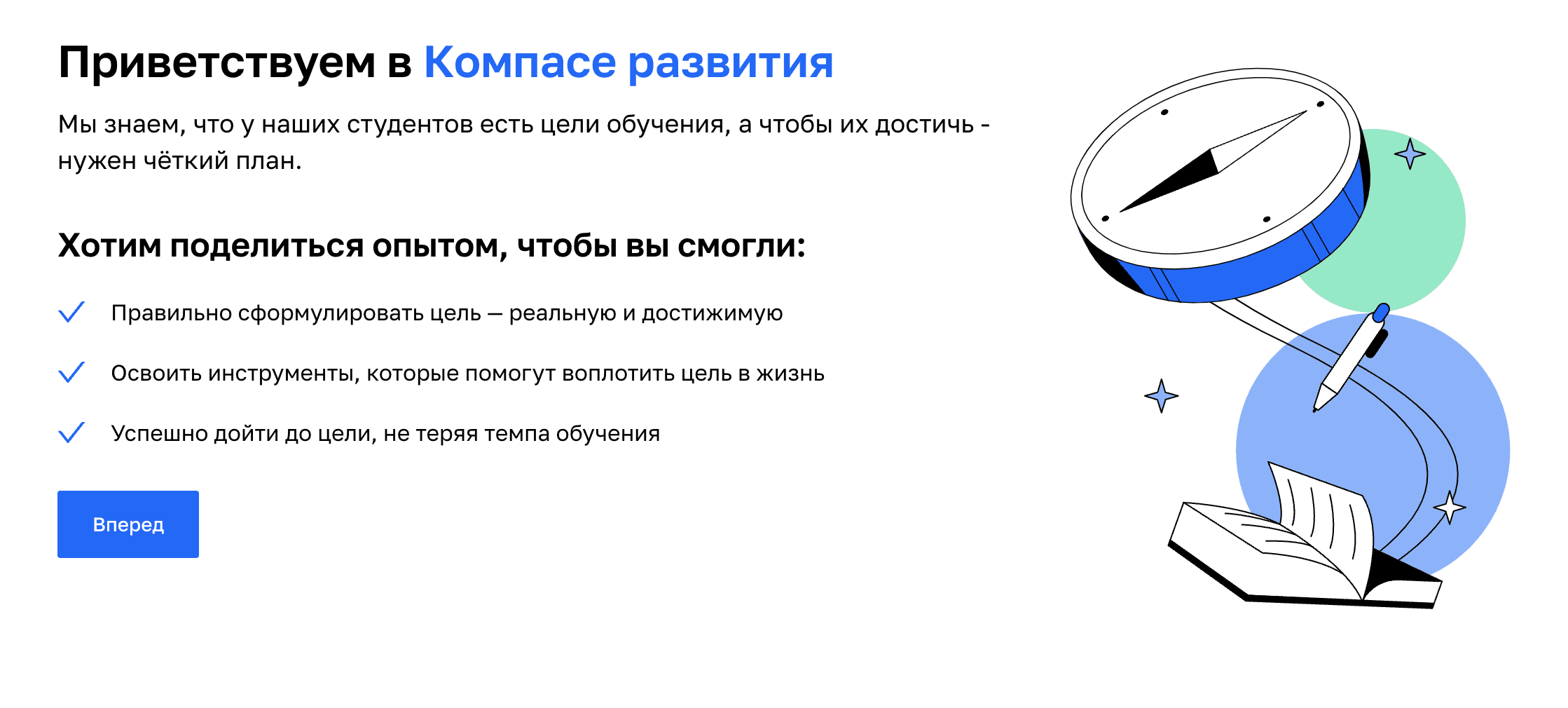
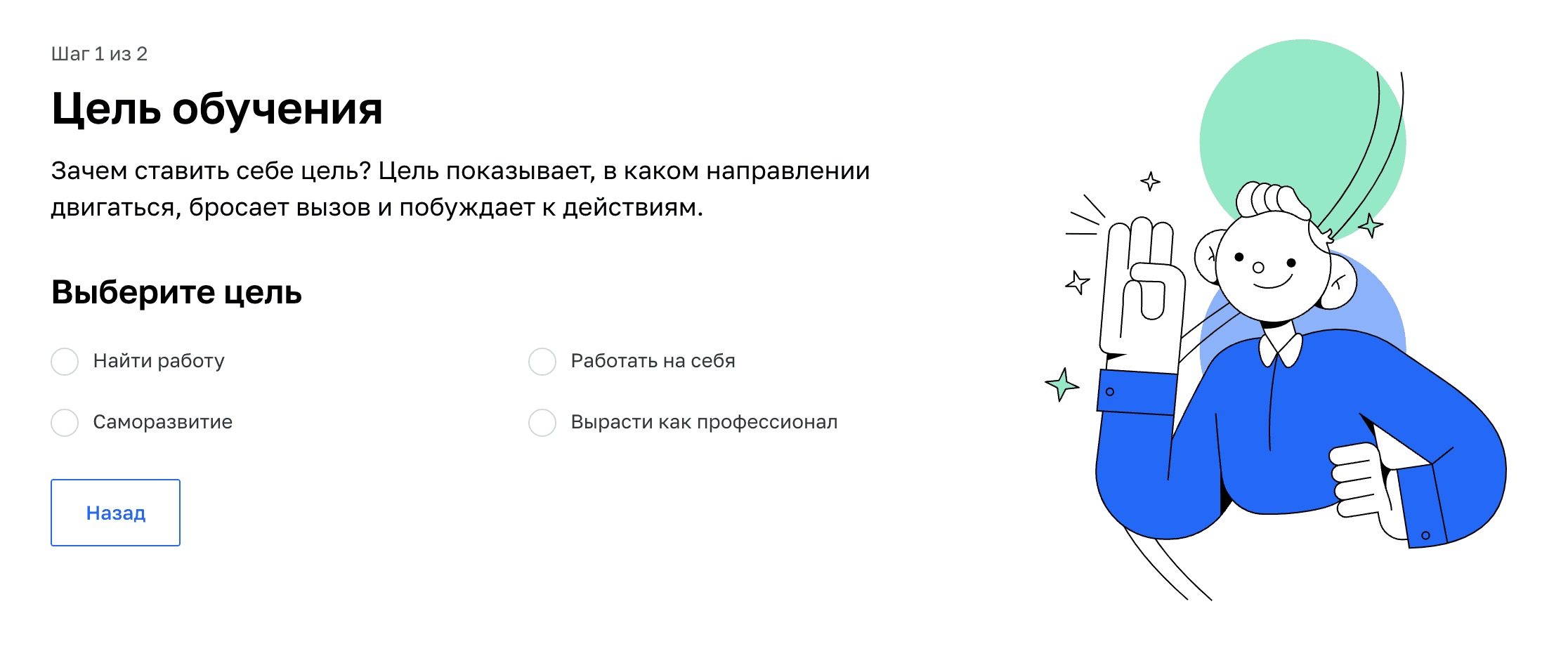
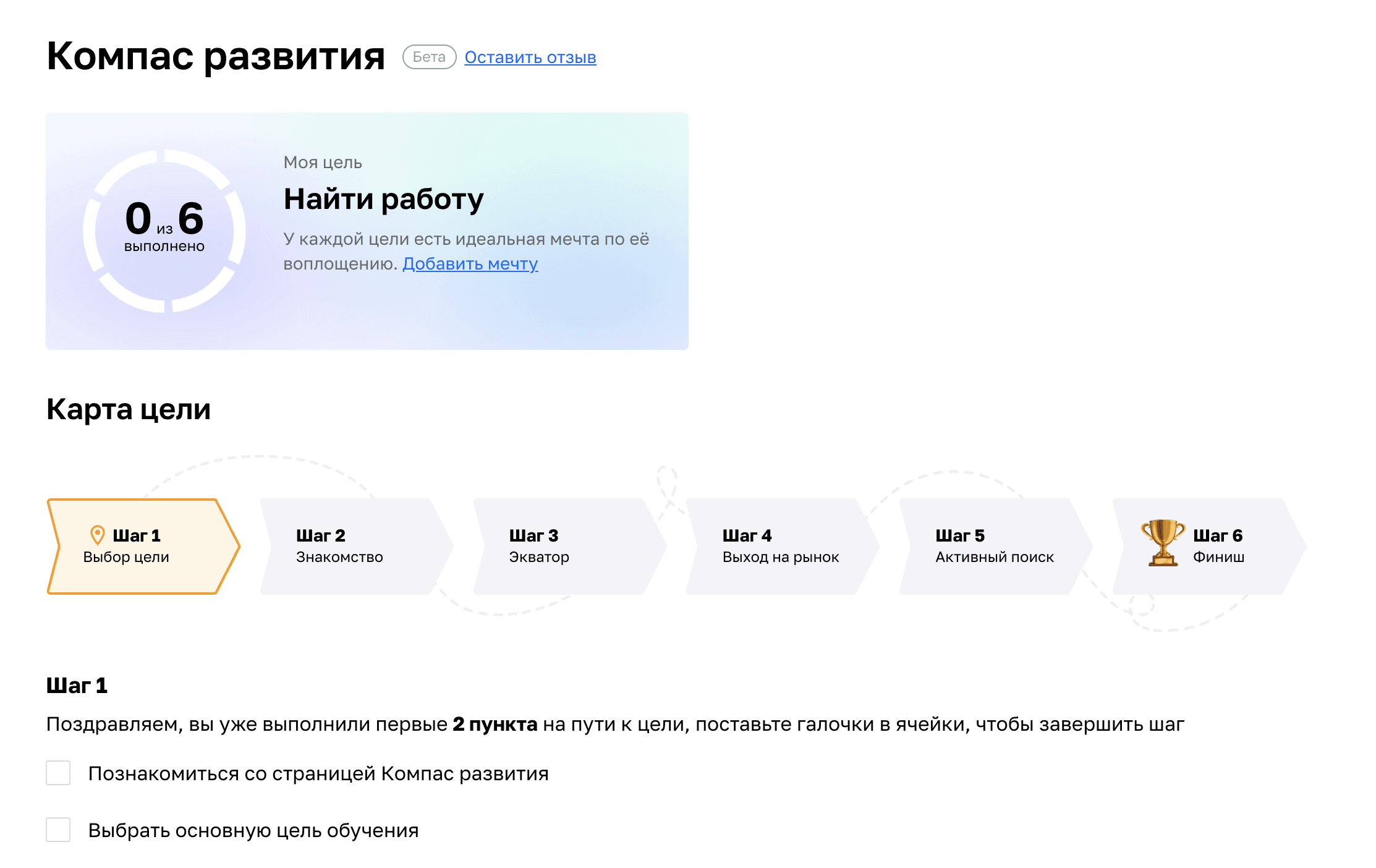
The experience begins with goal setting and then moves through focused, one-action steps. Check-ins teach students to formulate goals, reconsider needs, and stay oriented as they progress.
Outcome
By step four, students assemble a portfolio, cover letter, résumé, and self-presentation. Netology’s career team then matches them with roles and supports applications and interviews.
246 students joined the Q1–Q2 2023 beta. 67% received their first internship or junior offer before graduating.
Case 4 — Auto components
Global goal
Increase the speed of building educational presentations.
Hypothesis
A more efficient component architecture, especially for text, would significantly increase production speed.
Problems
- The presentation team could produce 500–600 slides per day while demand was around 1,000
- The existing design system was not optimized
- The team lacked time to rebuild the workflow and was considering hiring more designers
Results
Research showed that more than 70% of educational slides consisted of standard text blocks and lists. I created Text Combine, a component set covering roughly 85% of text layouts with only six controls.
This work predated Figma variables; the same tool would now be much easier to build.