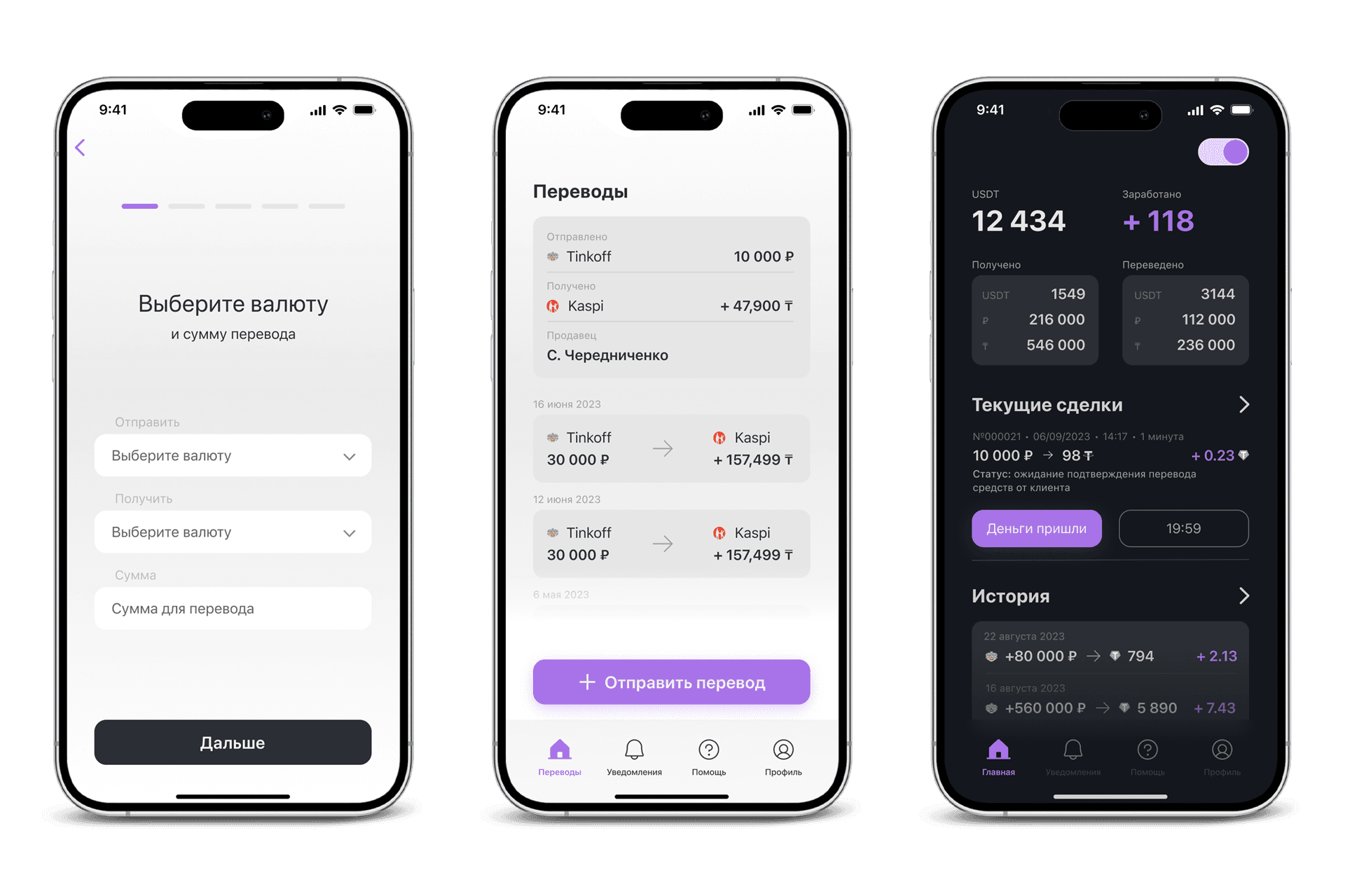
Kids Bank
A finance app for children at one of the CIS’s top private banks
Overview
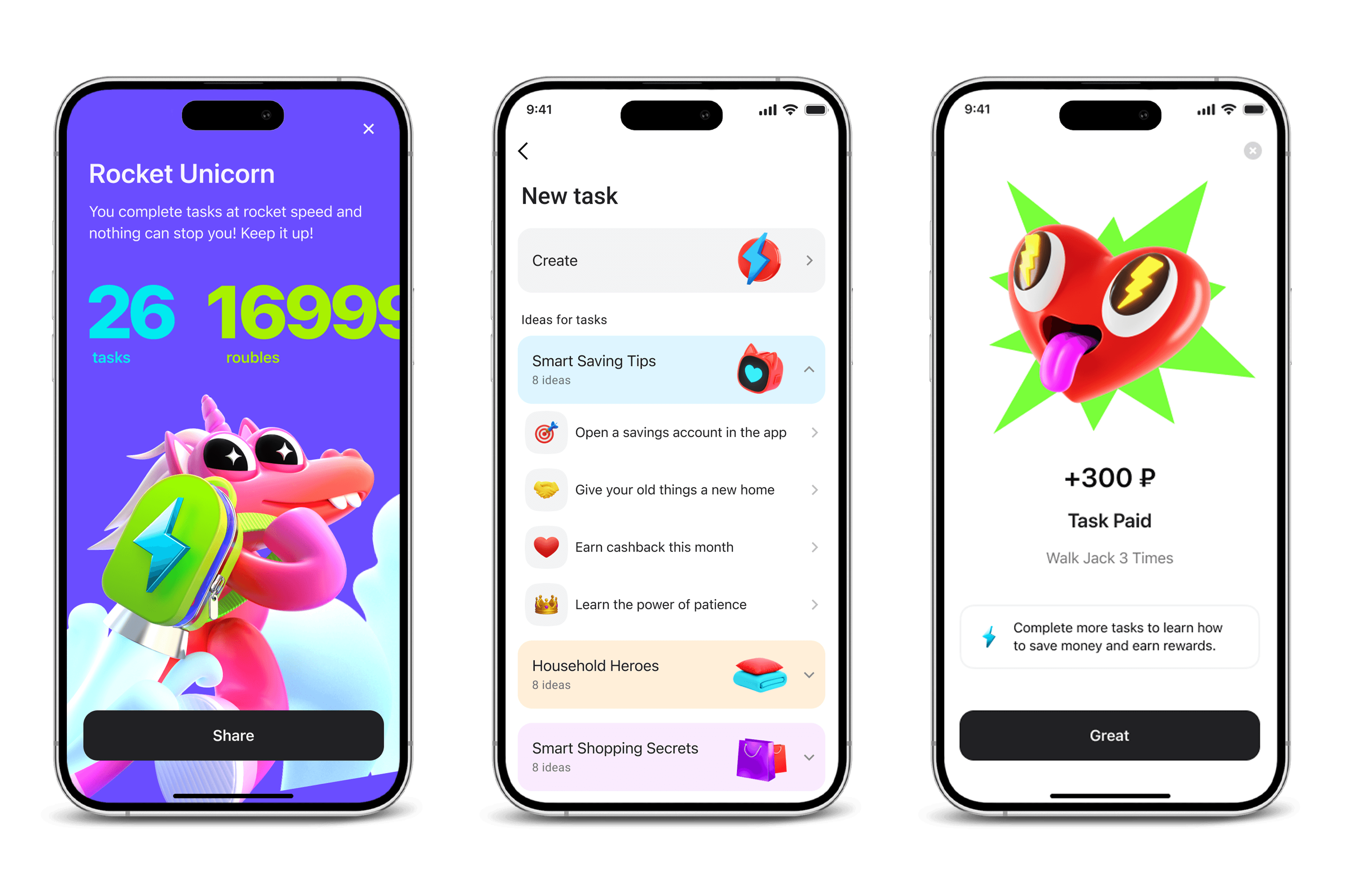
Alfa is one of the largest private banks in the CIS, with 30 million customers and $1.32 billion in net profit in 2023. One of its newer tracks was a fun, engaging app for children aged 6–14 to use their cards, stickers, savings products, and other banking services.
Young customers’ technological fluency and expectations are reshaping banking. Convenience, personalization, and engagement must sit at the core of financial services designed for the next generation.
My role
- Product discovery
- Customer interviews and research
- Concept design
- A/B testing
- UI design
Time
12 months
Main features
- A colorful, smart, and engaging interface
- Characters to choose from
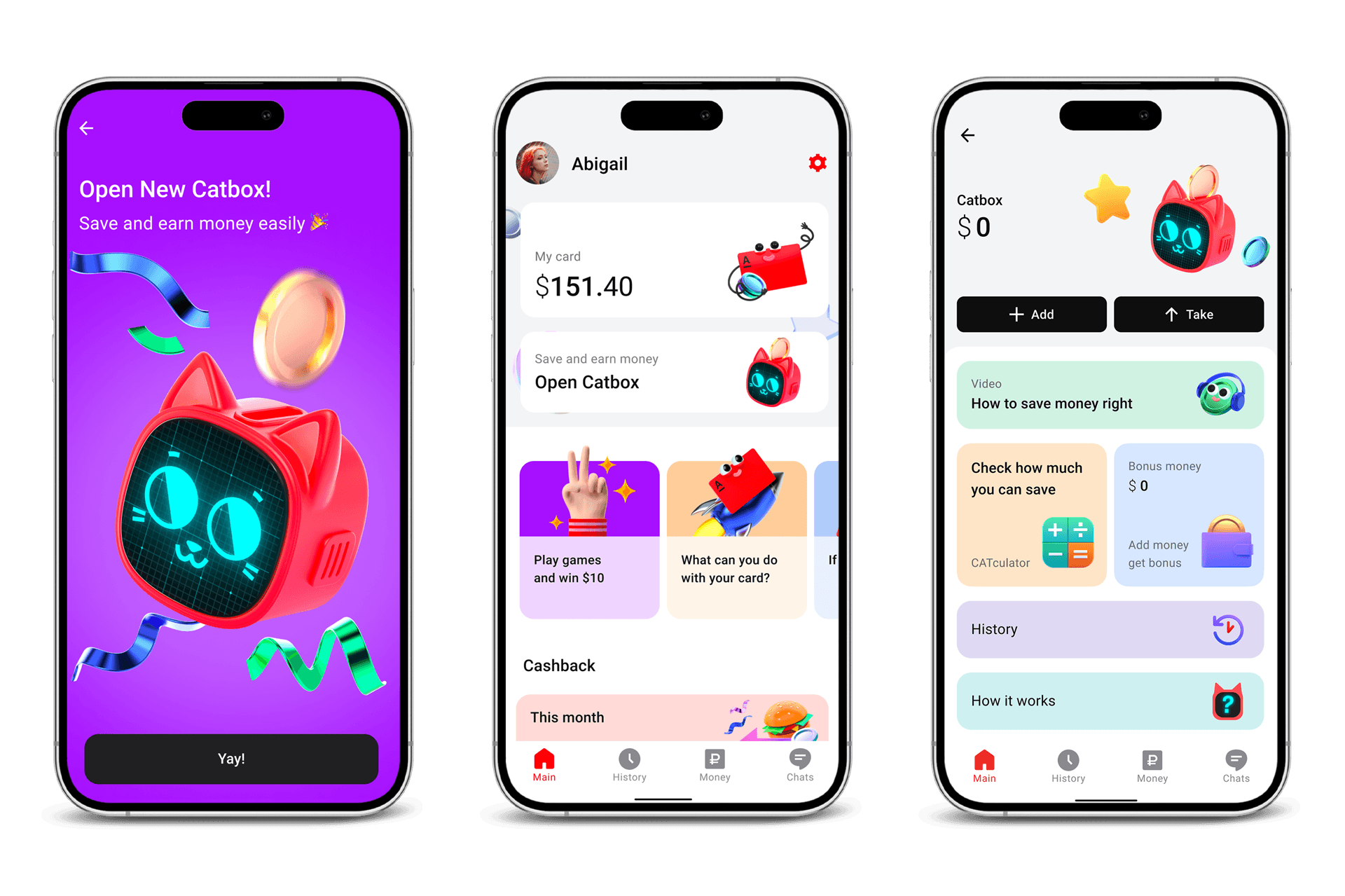
- Catbox savings account
- A simple way to see how much a child can save
- An emotional approach in every detail
- Gamification features
Case 1 — Catbox
Global goal
Create an engaging feature in the children’s app that helps them collect and store spare money.
Business tasks
- Increase retention and MAU/DAU
- Increase the number of children’s cards
- Increase intrabank transfers
- Build a relationship with customers before they turn 14
Platforms
Android, iOS, desktop web, and mobile web.
Problems
- Children did not understand interest rates and percentages
- Monthly income was small in monetary terms and felt frustrating
- The previous interface and copy were dull and emotionally disengaging
Hypotheses
- Shifting focus away from interest rates would make the savings feature easier to understand
- Renaming income would make the reward feel more positive
- A colorful interface and metaphorical icons would improve comprehension
- Friendlier names for interface elements would make the product more fun
Solving
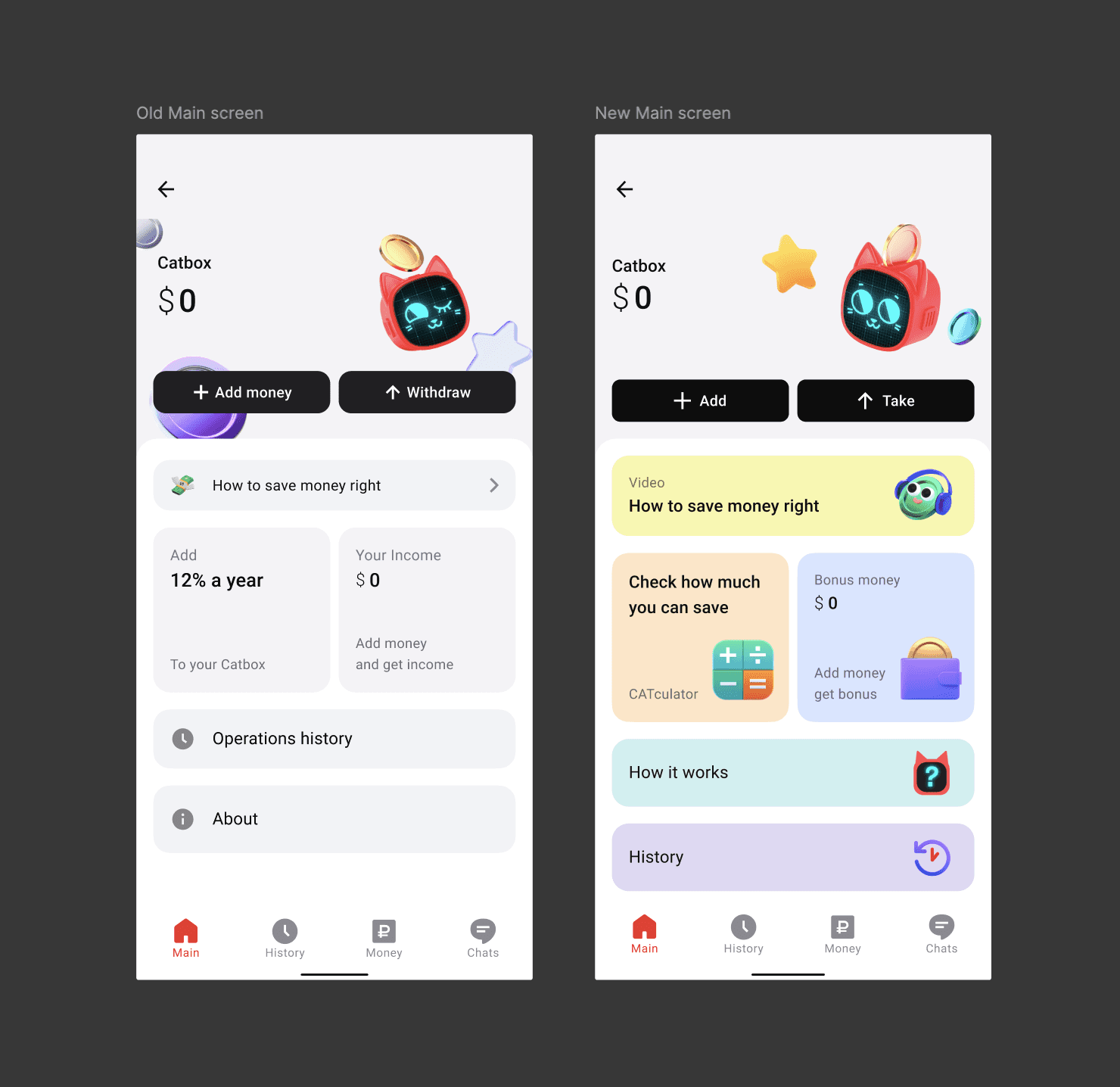
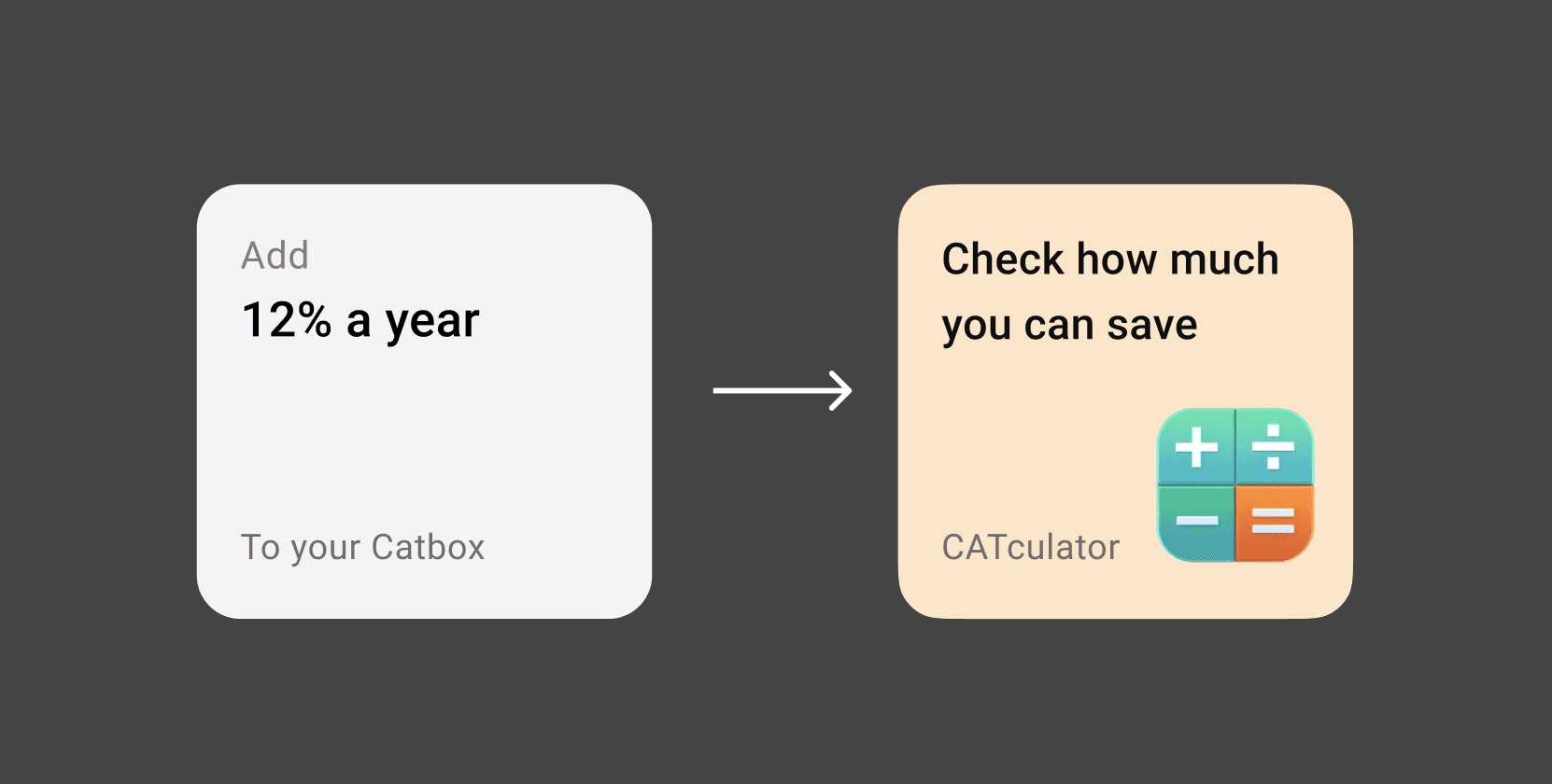
Instead of an Interest Rate widget, I introduced CATculator — a feature that shows children how much they can save. A 2.5D calculator icon made the widget understandable even for younger customers with limited reading skills.
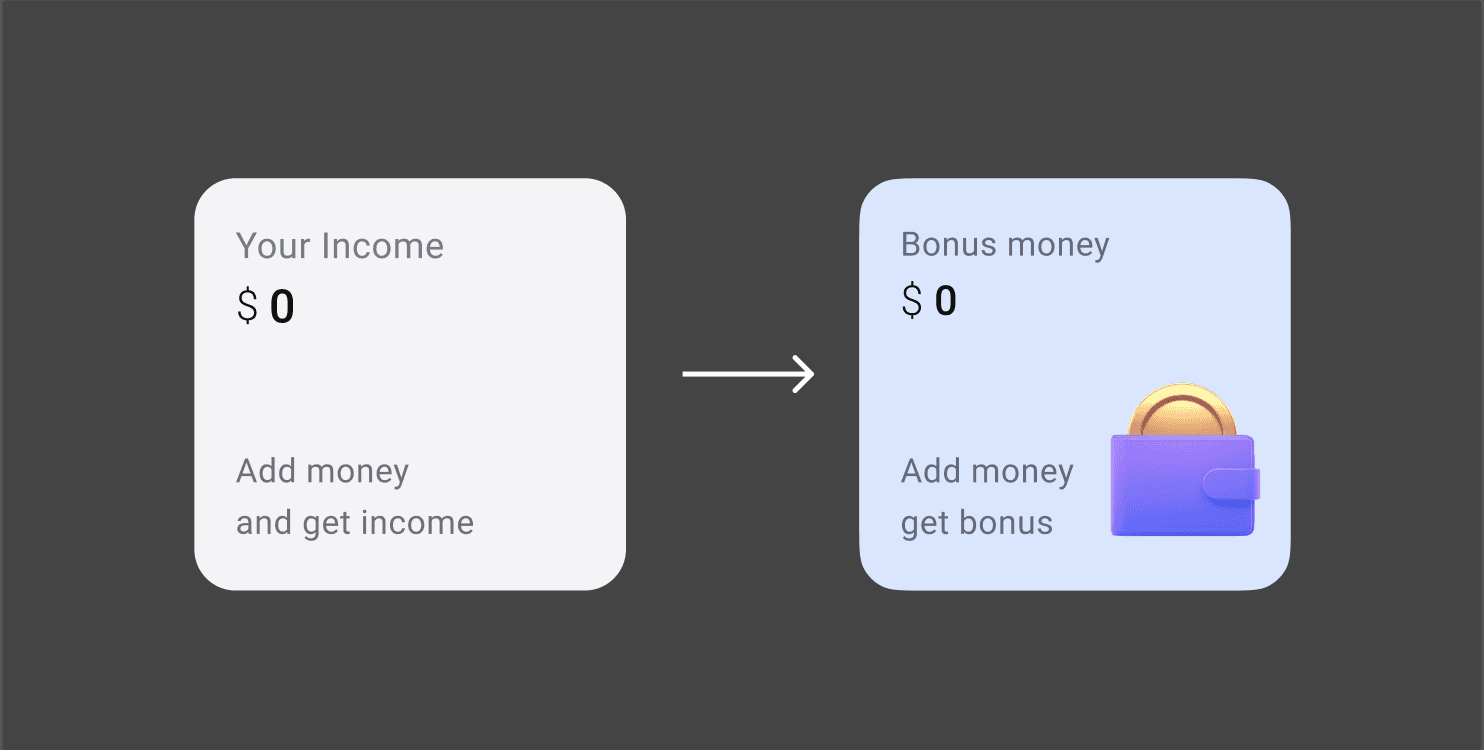
I renamed Income to Bonus money. Research and competitor analysis showed that the actual monthly amount would be small, so ‘income’ created the wrong expectation. ‘Bonus’ felt friendly and pleasant. A wallet icon with falling coins reinforced that the bonus was real money.
Operations history became History. About became the more intriguing How it works. Each item received a Catbox-themed icon. These details had a large effect: children scan interfaces quickly and use emotional anchors to navigate.
Case 2 — CATculator
Global goal
Increase motivation to add money to Catbox and keep it there by making the future outcome visible.
Hypothesis
If children can see how much they may save through simple mechanics and emotional feedback, they will add money more often and be more likely to reach their goals.
Start screen
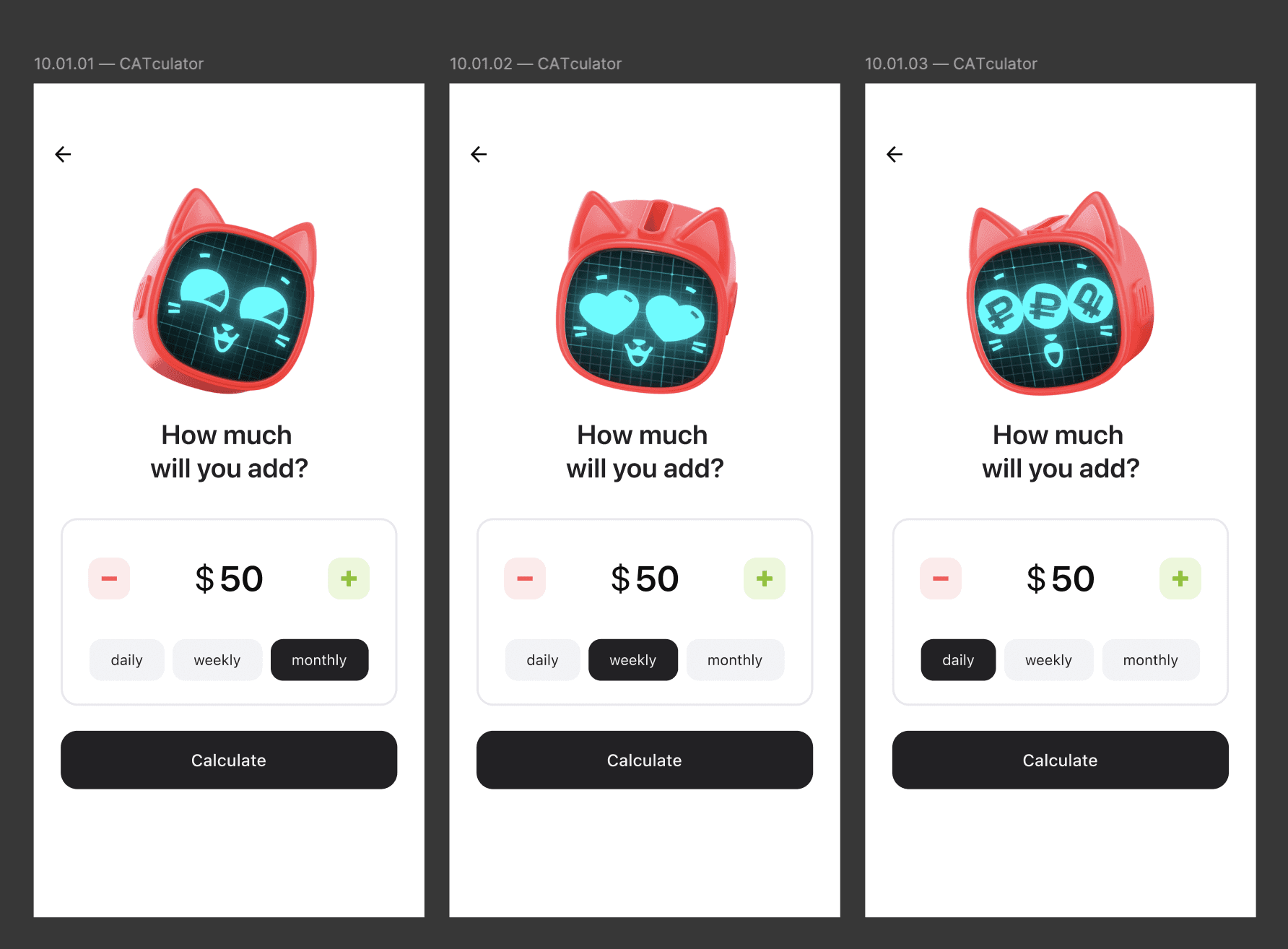
The calculator has only two controls. Children set an amount with large step buttons or by tapping the value, then choose a time period using chips. The Catbox character reacts to the selected period.
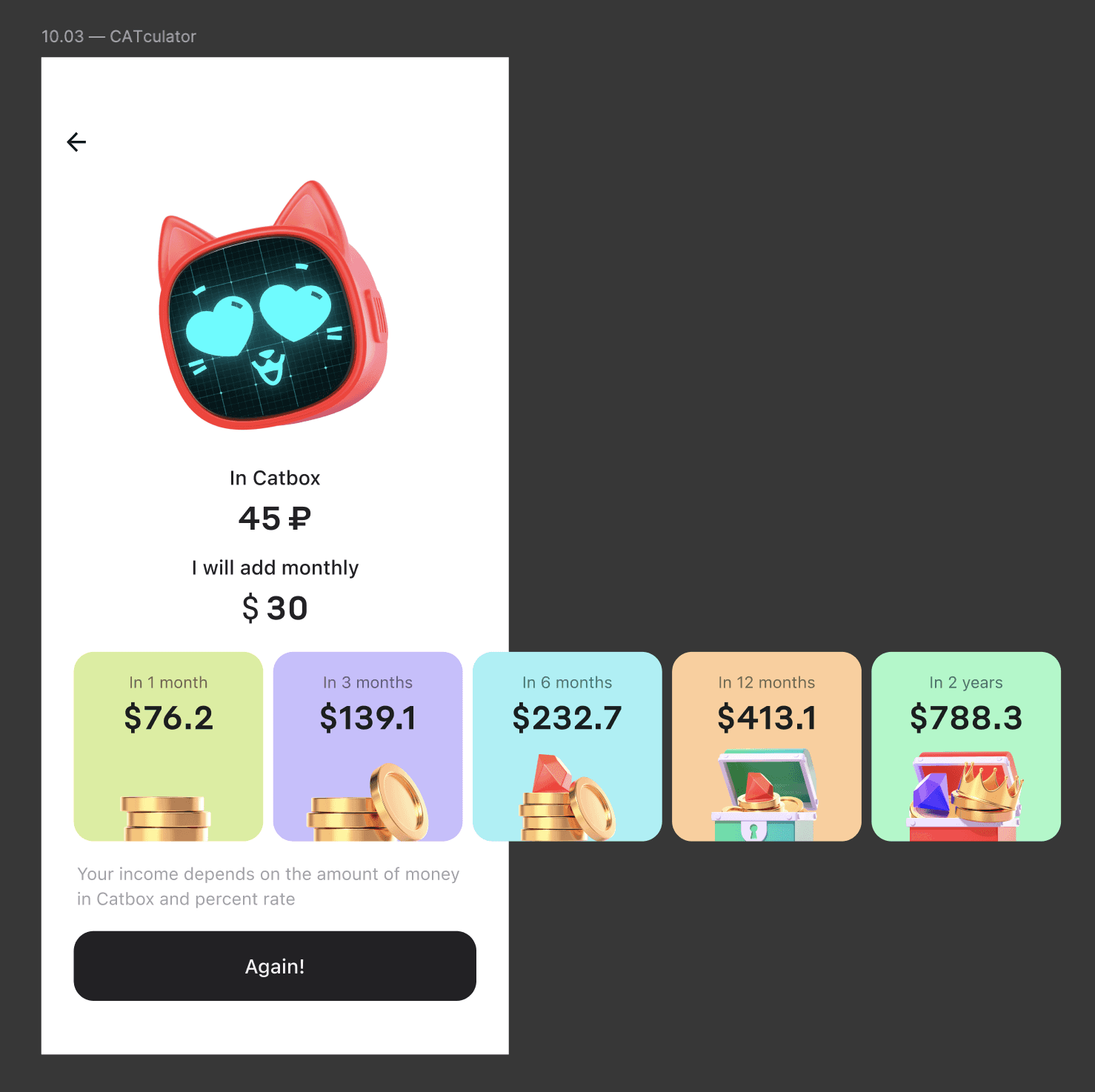
After Calculate, coins fall into the Catbox. The calculation is instant; the animation exists to create emotion and show the character becoming happier as it receives more money. A/B testing produced overwhelmingly positive feedback.
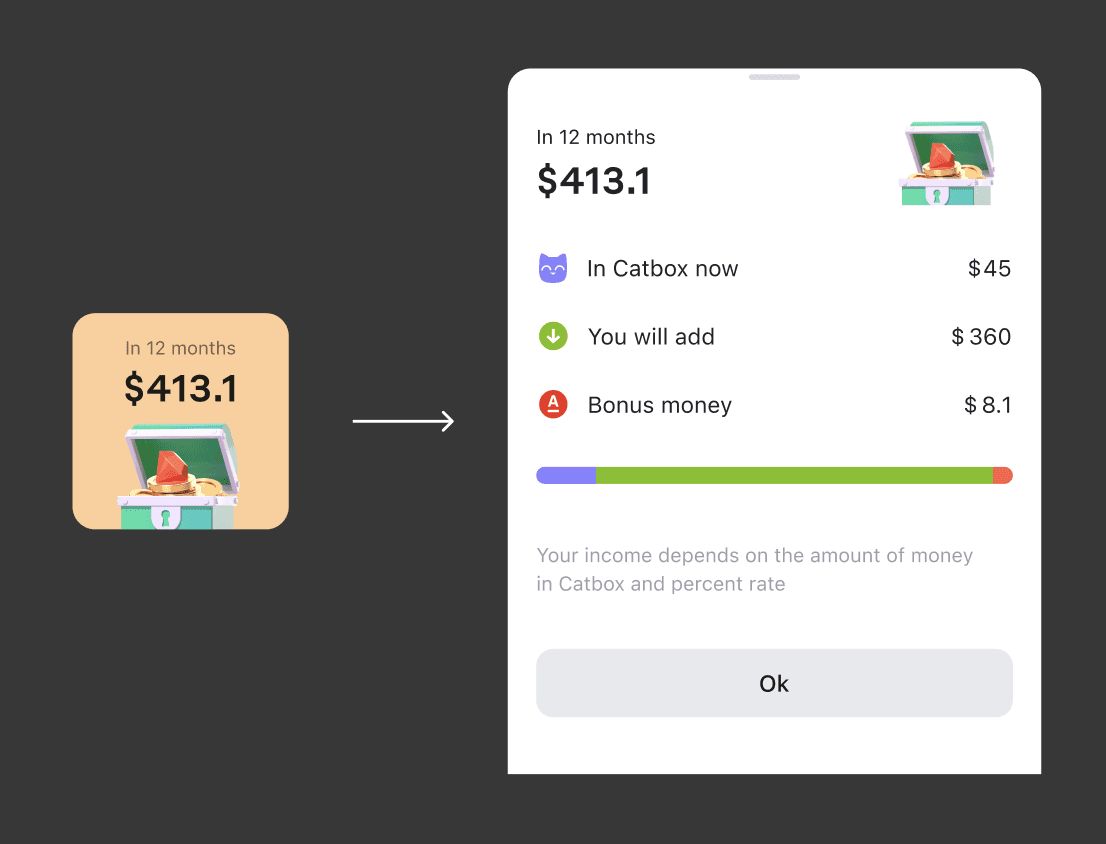
The result screen uses a carousel of colorful cards. This keeps the initial screen simple while still giving children a clear picture of how savings work. Detailed modal screens support older children who want to understand the calculation.
Key outcomes
- The Kids app audience grew to nearly 400,000 users
- Approximately 93% of Kids users opened a Catbox account
- Users collectively accumulated nearly ₽600 million in Catbox savings accounts
- Catbox became a core part of the children’s banking experience and an important way to introduce saving habits